...where distraction is the main attraction.
Showing posts with label Misc whiskies. Show all posts

Tuesday, February 8, 2022

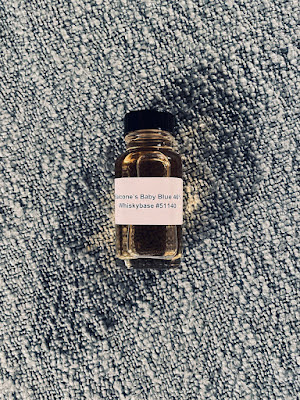
Balcones Baby Blue corn whiskey, Batch BB 09-11


I reviewed the center and right whiskies, the Wellers, yesterday. Today I would like to talk about the whiskey on the left, Balcones Baby Blue corn whiskey, batch BB 09-11.

Today's intro ends here because I'll have more to say below. I can't really top the second paragraph of my previous Balcones post anyway

Distillery: Balcones
Region: Waco, Tejas
Type: Corn Whiskey
Batch: BB 09-11
Mashbill: 100% Hopi blue corn
Maturation: refill 5-gallon barrels
Age: ???
Bottled: 17 December 2009
Alcohol by volume: 46%
(from a bottle split)

NOTES

The nose is mostly cheesy sweaty sock eau de vie with a side of glue, confectioner's sugar and dry boxed pasta.

The palate is very sweet, starting off with candy corn, vanilla and Canadian Club. There's some chemical bitterness and furry white dog in the background.

Finish - White dog-chased Nilla Wafers and that chemical bitterness.

WORDS WORDS WORDS

*Gives self the pep talk, "I won't turn this into a shitpost. I won't turn this into a shitpost. I won't turn this into a shitpost."*

Balcones distillery was founded in 2008, and this product was bottled in 2009, so it's no surprise that it reeks of a Revenue Release. The founder, Chip Tate, was a Blogger Buddy™ during his six years at the distillery's helm, so it's possible that many early bloggers gave Balcones products a pass in the early years. But this corn thing is the Craftiest of Craft Whiskies, the sort of thing many of us were complaining about more than a decade ago. Perhaps its sales helped keep the stills running back in the day, but it's a grim specimen to release to establish a brand. At its best it can be used as a Canadian Club substitute because the palate is salvageable on the rocks, a lot of rocks.

Availability - There are newer batches now, this one is gone
Pricing - Too much
Rating - 63

Wednesday, July 22, 2020

Booker's Little Book, Chapter 1, Straight Blended Whiskey

There's a rumor that July Fourth happened two weeks ago. Just in case that's true, I should probably continue with American whiskies this week as a late celebration.

My local friend, A.S., gave me a sample of the first Booker's Little Book more than a year ago. I did not realize at the time that this wasn't just another Booker's bourbon. In fact it's a blended whiskey, like Kessler, but (allegedly) better. Per Mr. Minnick, the whiskey is a mix of 4 year old bourbon, 13 year old corn, 5 year old 100% malt and 5 year old rye.

"Little Book" was Booker Noe's grandson's nickname, even though Little Book's actual name is Fred, like his father, and he's grownup, meanwhile they're treating the word "book" like a thing with pages so each chapter is a batch. If you follow. This whiskey is of Freddie's design, his first.

Owner: Beam Suntory
Brand: Booker's
Type: Straight Blended Whiskey
Distillery: Jim Beam Distillery
Location: Clermont, Kentucky
Blend: 4 year old bourbon, 13 year old corn, 5 year old 100% malt and 5 year old rye
Batch: "The Easy"
Alcohol by volume: 64.1% ABV
(thank you to A.S. for the sample!)

NOTES
At first sniff, it noses like a first-fill bourbon barrel Speyside single malt, then it shifts paths towards something closer to America. There's barrel char, cherry lollipops, gummi bears, paint VOCs and halvah. It sounds like a mess but it works. After 30 minutes it's picked up grilled corn, multigrain pancakes, vanilla ice cream and caramel sauce notes.

The palate is neither as hot or peanutty as I'd expected. The heat reads more like chiles than ethyl. It's very salty and floral. Notes say, "A mix of young corny bourbon and oversteeped sencha." Okay then. It improves after 30 minutes, gaining fresh ginger, lemons, honey, oranges and umami notes.

It finishes salty/brothy. More of that oversteeped sencha. It also has honey, oranges and barrel char. It gets woodier with time.

WORDS WORDS WORDS
Little Book batch 1 is better than most of the Booker's bourbon batches I've tried. It also doesn't cook the esophagus like Booker's bourbons do. I wouldn't call it the most coordinated or balanced whiskey but it's fun and (another terrible adjective warning) interesting. I would drink this again, though maybe not on these 95ºF days, and try to parse out how its elements work together or against each other. Though this release had a suggested retail price of $60, the Little Books now go for $125 in Ohio, so I will avoid hunting down a bottle.

Availability - Mostly sold out
Pricing - probably $100 and higher
Rating - 83

Friday, October 12, 2018

Balcones Texas Single Malt, batch SM16-9

It's time to ease back into the planned World Whisky voyage with a jaunt in Texas. Texas is a large landmass entrenched in the lower belly of North America. It is bigger than Spain and Switzerland combined. It is home to a great many cattle and people and people who eat cattle.

Balcones is a brand and distillery started by Chip Tate. Chip Tate left Balcones, not entirely voluntarily. I had planned to not buy any post-Chip Balcones products to make a statement no one would hear, but then I realized I didn't like any Balcones whisky enough to buy it in the first place. In fact, I think their Rumble liquor is the best thing they make. My favorite Balcones whisky product has always been their Texas Single Malt. It is bigly flavored as any proud Texan consumable should be.


Deep in the giant brown palm of Texas!

Distillery: 
Balcones
Region: Waco, Tejas
Type: Single Malt
Batch: SM16-9
Age: ???
Bottled: Halloween 2016
Mashbill: malted Golden Promise barley
Maturation: "barrels of different sizes and oak profiles"
Alcohol by volume: 53%
(From a Columbus Scotch Club event)

There's a lot of maroon about the brown in this whisky's color. The nose is much prettier than the other, earlier, batches I've tried. Vanilla extract, Cinnamon Toast Crunch and cream puffs. Then honey mixed into vanilla yogurt. Confectioner's sugar. A lingering whiff of chili powder. The first sip shows off the palate the best, delivering shredded wheat, roasted hazelnuts and aromatic cigars. Subsequent sips reveal a floral vanilla, ginger and sweet peppery heat. A wallop of tannins and a hint of bonfire smoke. The finish has a decent length with mild heat. Toasted nuts and toasted oak, tobacco, ginger and a marshmallow sweetness.

Though not a subtle thing, this Texas single malt certainly is the least violent batch I've tried. (I've really only tried three Chip-era batches before this post-Chip batch, so take that as you'd like.) The nose is very good and the palate leads on like it's going to be complex, but then fades out after five minutes in the glass.

Like Westland's and McCarthy's single malts, this is not a bourbon alternative. It's really a separate genre. Still, it's the biggest tree hugger outside of Austin, so its full embrace of oak will appeal to most American whiskey fans.

There's no reason for it to cling to the "Craft" realm any longer, because this is professionally made stuff. If it were priced in the $40s, I'd consider getting a bottle. But it shares Westland's pricing problem, often selling for more than $70.

Availability - many US liquor retail specialists, though possibly not this batch
Pricing - $60-$90
Rating - 83

Friday, August 4, 2017

Killing Whisky History, A Very Special Episode

To commemorate Diving for Pearls's's's TENTH anniversary, I am releasing to the world this Killing Whisky History episode about a Taste Off of two bottles of Kessler American Blended Whiskey. For science. For love. For truth. Press Play.

Friday, June 23, 2017

Bourbon and Rye Day Friday: Charbay Amador Hop Flavored Whiskey

I 💚 Charbay. Their infamous "Whiskey Release" series is, like, intergalactic, man. Their distillers, Marko and Miles, are madmen, so I'm happy to try anything they design. Unfortunately the whiskey world discovered that those Releases are superlative, so I can't afford any of them. But recently Karakasevics did some batches of cheaper whiskey experiments. There's Whiskey S, a distillation of Bear Republic Big Bear Stout. There's Whiskey R5, a distillation of Racer 5 IPA. Then there's today's piece of craziness.

Amador Hop Flavored Whiskey is, as per the official site:
A blend of 60% straight malt whiskey and 40% hop-flavored whiskey distilled from a craft IPA beer, the components were aged separately for over 2 years in French oak wine barrels and then “married” in our family Chardonnay barrels for another 2 years before being bottled.
So, no, this is neither bourbon nor rye. But it's American, so there.


Companies: Charbay and Amador Whiskey Co.
Distillery: Charbay
Location: St. Helena, California
What the hell is this made out of? See description above
Age: at least 4 years old
Batch: 1
Barrel: 2
ABV: 48% ABV
(Thank you to Sku for this sample!)

The nose has an intensely fruity side: lemonade, mango and grapefruit. It also has a rich sugary side: vanilla fudge, circus peanuts and a hint of maple syrup. Lots of hops that haven't gone Full Weed yet. The palate is wonderfully, violently tart. More lemon than lemon. Pine sap and grapefruit. Roasted grains, lots of hops. A bit of a sweaty, musty note. Its loooooooong finish is full of hops, pine, grapefruit and lime juice. A little bit of sweetness reins the tartness in.

Odd but joyous. There's no other way I can find to describe it. The IPA element is unmistakable and has run right over the malt. Everything is big and crazy and it's probably a good idea the thing wasn't bottled at full strength because it may have caused a tear in the space-time continuum. As intense as it is, I can see it as being a great spring or summer sipper because of its IPAness (don't say that word out loud). Great work, Miles and Marko!

Availability - At a few dozen American whiskey specialists
Pricing - anywhere between $75-$115
Rating - 87

Friday, March 11, 2016

When Heaven Hill Goes Malt: Parker's Heritage Collection 9th Edition, 8 year old Straight Malt Whiskey

Released annually by Heaven Hill, the Parker's Heritage whiskies are a tribute to Master Distiller Parker Beam.  Since Mr. Beam was diagnosed with ALS (Amyotrophic Lateral Sclerosis), a portion ($5) of each bottle sold gets donated to the ALS Promise Fund.  Meanwhile, the whiskies themselves have become big time collectors' items, fetching big money on the secondary market.  It would be nice if the flippers who sell their bottles for 3x the MSRP would also donate at least $5 to the ALS Promise Fund for each bottle they sell, but since they don't, fuck 'em.

Most of the previous editions were experimental bourbons, some super old, some super strong, some wheated, and some were mashbill mixes.  (The eighth edition was a wheat whiskey. Thank you, Richard for catching that.)  This ninth edition is a Straight Malt Whiskey.  Like a Straight Rye whiskey, a Straight Malt Whiskey (something rarely seen) must have 51% of its mashbill be its listed grain, thus malted barley in this case.  The mashbill used by Heaven Hill here was 65% malted barley and 35% corn.  It was distilled by Craig Beam, Parker's son, in late 2006.

I'd like to thank Mr. WSKY-CVLT (aka Dirty Uncle Mike) -- the rare man who actually opens his bottles and drinks them --for this sample.


Distiller: Heaven Hill
Brand: Parker's Heritage
Region: Louisville, Kentucky
Type: Straight Malt Whiskey
Age: 8 years old, distilled in 2006
Maturation: New American oak
Mashbill: 65% malted barley, 35% corn
Alcohol by Volume: 54%

NEAT
Color -- Glendronach

Nose -- It starts with pinesap, lemon-scented Mr. Clean, freshly sliced ginger, and eucalyptus.  But at the same time it does the candy shop note more successfully than Glenmorangie Milsean.  Minor notes include caramel, new tar, and melon rind.

Palate -- MINT.  Mint leaves, mint toothpaste, and crème de menthe.  Some white fruits and chocolate thrown in for good measure.  Simultaneously it shows off an alternate personality: oaky bourbon.  Vanilla, caramel, and cherry candy.

Finish -- Cocoa melts into milk chocolate.  Add in the mint and we get Andes candies.  It grows sweeter with time, and has an occasional bitter nudge that matches up with tart limes.

WITH WATER (~46%abv)
Nose -- It gets a little malty and salty.  A little bit of the pine and caramel remain.  And here comes the mint.

Palate -- At turns malty and bourbon-y.  The mint tones down.  Cherry candy and wood pulp get louder.  An growing bitterness appears.

Finish -- Good length.  Less sweet.  A coffee bitterness and just a whisper of mint.  A new sourness.

WITH WATER (~40%abv)
Nose -- Spearmint candy canes with a little chocolate in the background.  Clean malt underneath.

Palate -- Mint extract.  A weird bitterness arrives, towing behind it a slight soapiness.

Finish -- Minty metallic soap.

COMMENTS:
What a strange whiskey.  The nose works really well, with or without water.   But the neat palate tastes like some odd bourbon cocktail.  It straightens out with a little bit of water, but then falls apart as more water is added.  The finish works best when neat, but (like the palate) it crumbles at 40%abv.  Yesterday, Josh from Sipology mentioned that the mint character can be found in other Heaven Hill products (see the tweets here) so that helped me understand those curious notes.

I'm thankful to have had an opportunity to try this since the stuff is neither fish nor fowl.  It was a unique experience and the whiskey deserves points for that.  Because of its quirks, I thought it best to list some other opinions of the whiskey:

--For a variety of takes here are those by the LAWS guys.  'Fuji' is one of the few folks who found the mint note too.
--For a mixed review see Red, White, and Bourbon.
--For a positive review, see The Whisky Jug's post.
--Axis of Whisky found a bit of mint in it too, but liked it more than I.
--And Whisky Advocate gave it an 84, which I think translates into D- in their system.

Apparently I'm the only one who got bugged out about the minty intensity.  So take that fact as you'd like.  It's very cool that Heaven Hill released an experimental American malt with some age on it.  I hope other producers try it (maybe with some rye in the mashbill!) and find a more balanced result.

Availability - Here and there, mostly in the secondary market
Pricing - Primary market only: $100 to $300 (yup)
Rating - 78

Tuesday, November 24, 2015

Whisky #500: Abraham Bowman Virginia Rye (exclusive to The Party Source, barrel #2)

And some of you are going, "Huh?"

Okay, maybe some backstory?  I'll try to keep it brief.

Abraham Bowman is a whiskey brand owned by A. Smith Bowman, which is in turn owned by Sazerac.  A. Smith Bowman does have its own distillery in Virginia and (according to Sku) rather than distilling grain mash, they distill spirit that has already been distilled by Buffalo Trace.  In 2011, they released three single barrel ryes exclusively through The Party Source in Kentucky.  For these whiskies, Bowman took Thomas H. Handy rye spirit (sources here and here) and re-distilled it.  They were all left to matured longer than Buffalo Trace's Handy releases -- somewhere around 10 years -- and all have very high ABVs.

In 2012, Florin (a prince) poured a glass of barrel #2 for me.  It was the best American whiskey I'd ever had.  Over the years it has kept that title.  But I wondered recently, had I begun to inflate this memory?  I've had a lot of American whiskey since then.  And other people (see the links above and also LAWS) raved about barrel #1, but no one to my knowledge had reviewed barrel #2.  Thankfully, I had a sample of this very rye, which I opened on Mathilda's 18-month birthday.

The important thing to remember is:
Change is goo.
Brand: Abraham Bowman
Company:  A. Smith Bowman
Owner: Sazerac
Type: Straight Rye Whiskey
Final Distillation: March 14, 2001
Bottled: May 12, 2011
Age10 years
MaturationNew American Oak
RegionFredricksburg, Virginia (though originally distilled in Frankfort, Kentucky)
Barrel: 2
Retailer: The Party Source
Alcohol by Volume67.3%
(Sample acquired via a swap with Florin three years ago. Thanks!)

Tasting Notes:

Color -- A red brown, like cherrywood.

Nose -- Enormous wood notes.  Vanilla beans, butter toffee ice cream, pencil shavings, and Hershey's syrup.  Weaving within the oak desserts are mint leaves, cherry candy, Macintosh apple skins, and (maybe) slivovitz.  It also picks up some orange oil notes after a half hour.

Palate -- Not only does it have most of the nose's notes, but it's also loaded with thick gooey rye, salt, limes, and chili oil.  So much toffee.  Almond cookies, vanilla mingling with toasted nuts.  It's also a little malty at times too.  The peppery spice box notes lift off at the 30 minute mark.

Finish -- All night long.  Chili oil and brown sugar.  Oak smoke and toffee.  Then the rye hammer lands and spice fills the face.

More words:

As wonderful as I'd remembered.  You may ask, "Did you try it with water?"  And I may answer, "Nope."  This should be experienced in its full thunderous form.  Very bold but very composed and, well, delicious.  Multiple times during this tasting I discovered I'd gotten lost in reverie.  I can't think of an American whiskey I've tried that can match this rye.

I'm of many minds about this, partially because I am Sybil, and partially because of the utter shitshow that the premium American whiskey marketplace has become.  It would be wonderful if Bowman would produce more of this rye at full strength because people need to try it.  But it would royally suck if they only released it exclusively through a retailer that doesn't ship.  What would suck even more royally is that if they did release more single barrels today then most retailers and all flippers would sell it for 5x its MSRP and no one would actually open a bottle.  So maybe it was best that it was sold four years ago.  Some people actually drank it.  Change is goo?

Availability - None
Pricing - ???
Rating - 94

Wednesday, December 31, 2014

Hello, Loch Dhu and Cu Dhub. Goodbye, 2014.

With the appearance of Mathilda, the sweet little elfin Kravitz queen, in my life, 2014 has been a year unlike any other.  When people ask me what it's like being a father, I tell them that I am learning so much about myself.  And I leave it at that.  You newer parents out there know that the things you learn about yourself aren't always wonderful, shiny, and glorious.  We hold within us the potential of great loving kindness, but we are also capable of a bunch of other shit.

I will publicly opine further on fatherhood in 2015, but no further at the moment.  It's time to move forward to the review I've anticipated the most this year.*  Yes, I've reviewed Laphroaigs 25, 30, and 40.  I've reviewed two different Talisker 25s.  One official Brora.  A 35 year old Calvados.  Two Karuizawas.  A 1975 Glendronach.  Four Kilkerrans, a trio of Littlemills, a pair of dusty Old Taylors, and one George T. Stagg (twice).  But this.  This is bigger.


Loch Dhu and Cu Dhub are the two black whiskies, loaded to gills with the industrial colloid e150a (caramel colorant), though Diageo claimed Dhu's blackness was from double-charred casks (tee hee, Diageo funny).  Loch Dhu is well despised yet well collected, meanwhile the vitriol and excitement for Cu Dubh seems to be more restrained.  The Dhu seems to be the Plan 9 From Outer Space of whiskies**, while The Dhub is Dino de Laurentiis's King Kong.  Or is it The Terror of Tiny Town?  I'm hoping for at least a Myra Breckenridge, featuring Rex Reed as an aspiring transexual.

LOCH DHU
Distillery: Mannochmore
Ownership: Diageo
Age: minimum 10 years
Maturation: mystery oak
Region: Speyside (Lossie)
Alcohol by Volume: 40%
Chillfiltered? Yes
Caramel Colored? holy moley
(Thank you to the great Andy Smith for the sample of The Black Lake)

CU DUBH
Distillery: The Speyside Distillery, proud producers of Drumguish
Ownership: Speyside Distillers Limited
Age: NAS
Maturation: mystery oak
Region: Speyside (indeed)
Alcohol by Volume: 40%
Chillfiltered? Probably
Caramel Colored? Quite
(This sample was purchased from Master of Malt)


THE COLORS!!!
-- Loch Dhu -- Soy sauce

-- Cu Dhub -- A reddish black tea

THE NOSES!!!
-- Loch Dhu -- Burnt prunes. Burnt raisins. But mostly, burnt caramel (that's the first thing Kristen noticed too).  Then Worcestershire sauce intermingling with Kikkoman's regular soy sauce.  Fresh celery, carpet, shredded wheat nuggets, and old library books.  It's somewhat fungal, like foot fungus.

-- Cu Dhub -- Ooh, very cabbagey.  Farty fart farty.  Pencil graphite meets imitation vanilla extract meets brown sugar meets styrofoam.  Lots of sour milk and warm Coca Cola.

THE PALATES!!!
-- Loch Dhu -- Burnt coffee, and lots of it.  Cardboard, or like licking a whisky label.  Horseradish and dirt.  It's so chemically, like someone tried to make a diet salty coffee soda syrup then gave up, added new make, and called it whisky.  Bitterness.  Sadness.

-- Cu Dhub -- So much caramel.  Weird sweetness, maybe aspartame?  A cardboard box holding burnt prunes, ground black pepper, and overripe bananas.  And the sour milk.

THE FINISHES!!!
-- Loch Dhu -- It's still coffee-ish, but with ammonia.  Acrid boiled collard greens.

-- Cu Dhub -- Rotting veg, burnt grass, Jersey City.  Longer than a goddamn car alarm.

THE VERDICTS!!!
These are sincerely broken things.  I mean, you smell 'em and you drink 'em and you wonder if steeping your kitchen garbage bag in hot water would produce a better result.

Color - I guess Dhu-Dhu wins because it's blacker.
Nose - Cu Dhub's nose is awful awful awful.  Loch Dhu's is actually fascinating, like it's some sort of failed herbal liqueur.
Palate - Meanwhile Cu Dhub is sort of drinkable.  I might even pick it over Cutty, if I was blindfolded.  But crap it all, Loch Dhu earns its reputation in the mouth.  I can't believe someone bottled and sold this.
Finish - Here things only get worse for both of them.  Loch Dhu is slightly worse due to the aggressiveness of the chemicals.

Neither of these whiskies made me concerned about my wellbeing, so they don't make my bottom 5.  But they're damn close.  These sorts of levels of e150a would be an interesting free experiment, especially if they don't turn out to be carcinogenic.

If you're looking to obtain a bottle of either of these, why?  I'm not even going to assist you in your search.  Either you're looking to "invest" in whiskies or you have masochistic tendencies that would be better served by indulging in the BDSM scene.

And with that, HAPPY NEW YEAR!

LOCH DHU
Availability - Unhappy hunting!
Pricing - One million dollars. Or $200-$400.
Rating - 45

CU DHUB
Availability - It's around, sorta
Pricing - $30-$60
Rating - 47

* - Since writing this review, I have discovered that Serge did this same taste off exactly 10 years ago.  Ha, so much for originality...
** - And I have also just discovered that Tim Read already made the Plan 9 reference years ago.  That's neat.

Wednesday, September 10, 2014

A Pair of Dickels, Classic No. 8 and Rye Whisky

When it comes to Tennessee Whisk(e)y many of you know more about it than I.  This I blame on Jack Daniels Tennessee Whiskey, one of America's worst exports, worse than nuclear weapons and Jerry Lewis.  I've never understood why people choose to get drunk off of Jack.  Yes, they want the rock star cliché but, goddamn it, rock stars have gotten drunk off of everything.  Go huff gasoline fumes rather than drinking Jack from the bottle; the lights will be brighter and you'll pass out quicker.  Mmmmm, gasoline.


I first heard of George Dickel in the film Wonder Boys, in which a double Dickel on the rocks was Grady Tripp's drink of choice.  The Dickel didn't hit my lips until last year, when Florin (a prince) donated most of a 375mL bottle of Dickel's No. 8 to the Diving for Pearls Laboratories.

Dickel's bourbon-esque mashbill is very high in corn, around 84%.  They use the Lincoln County Process, which is now legally required in order to label a booze "Tennessee Whiskey" (except for Prichard's).  In a small shriveled nutshell, the Lincoln County Process is a method wherein the spirit is filtered through or soaked in charcoal chips, chunks, or slabs before being poured into barrels.  The benefit of this filtration is something forever debated between Kentucky and Tennessee whiskey fans. (For more and better info see The Chuck Cowdery Blog.)

In 2012, Dickel released a rye.  Using MGP spirit (95% rye), they give it a pass through charcoal before barreling it in order to Tennessee-up its Indiananess.

While Dickel has other products -- such as the No. 12, No. 1, and Barrel Select -- today I'm reporting on the "Classic No. 8" and the rye.

Brand: George Dickel
Product: Classic No. 8
Owner: Diageo :(
Distillery: Cascade Hollow
Location: Normandy, Tennessee, USA
Type: Tennessee Whiskey
Mash Bill: 84% corn, 8% rye, 8% malted barley
Barrel Char: #4 on the barrel, #2 on the heads
Age: used to be 4 to 6 years, probably closer to 4 years now
Bottle code: L00192P00109:48 (2000 or 2010?)
Alcohol by Volume: 40%
(Thank you to Florin for the sample!)

The color is light gold.  The nose is bright and brown sugary.  Something smoky lingers, whether from the barrel or the charcoal.  There are notes of oatmeal and baby spit-up, along with peppery rye.  The butyric note grows with time.  The palate is full of yeast, barley, and burnt corn.  Smaller notes of fennel seeds and tree bark float around.  There's also a strong vegetal note throughout, sometimes it's asparagus, sometimes black kale, sometimes brussels sprouts.  The vegetal thing continues into the very drying finish, joined by oak pulp and bark, burnt corn, and (perhaps) urine.

More on this below.  Onto the rye.

Brand: George Dickel
Product: Rye
Owner: Diageo :(
Distillery: Midwest Grain Products
Location: Lawrenceburg, Indiana, USA
Type: Rye Whiskey
Mash Bill: 95% rye, 5% malted barley
Barrel Char: #4 on the barrel, #2 on the heads
Age: ???
Alcohol by Volume: 45%
(Thank you to Florin for the sample!)

The color is a much redder gold than the No. 8.  In the nose there's a load of the MGP-style rye herbal spices, trending peppery.  It's also floral and very sugary (lollipops, caramel, and cotton candy).  I'm also finding some papaya and raspberry jam amongst a bit of charred oak.  The palate is the mildest MGP rye I've had: a heavily watered down Willett mixed with simple syrup.  There's cherry lollipops, rosewater, lots of peppercorns, and a hint of berry syrup.  It gets drier in the finish.  More oak rumbles in.  Sweet caramel and black pepper.


The rye is rounder and bolder than the No. 8.  But keep in mind, I'm biased towards MGP's rye.  The noses are the best parts of both whiskies.  The veggie note in the No. 8 isn't as big as my notes may make it seem, but it is definitely present.  When I drank the No. 8 last summer, I usually did it on the rocks and found it pleasant enough.  So, I recommend doing it Grady Tripp-style.  Hitting it with ice cuts the veggie notes out completely.  The rye doesn't need ice.  I also think it didn't deserve any charcoal filtering, as that was likely responsible for domesticating the MGP beast.

While the No. 8 is the weaker whisky, it is still a step or two above Jack Daniel's Old No. 7.  But then again, so are hemorrhoids.

GEORGE DICKEL CLASSIC NO. 8 WHISKY
Availability - At most major retailers
Pricing - $15-$20
Rating - 75

GEORGE DICKEL RYE WHISKY
Availability - At most major retailers
Pricing - $20-$26
Rating - 82

Tuesday, September 2, 2014

Koval's Lion's Pride Organic Dark Millet and Organic Dark Rye Whiskies

If you've been wondering where the "R" in Whiskyfun's "Stanahan's" review went, I stole it.

Florin gave me substantial samples of two whiskies (thank you!!!), both of which I labelled and referred to as "Korval" for almost four months.  It was when I started googling Korval that I realized there is no Korval distillery.  There's a Koval distillery, located in Chicago -- in the actual city, near Ravenswood and Lincoln Square -- and run by the Birnbeckers, an Austrian family with distillers in their lineage.  Koval has made a number of whiskies using grains that are often grown in America but are rarely distilled.

Until recently their main range was called Lion's Pride (named after their son, Lion) and it contained a number of organic whiskies. Very recently, the "Lion's Pride" title was discarded and the entire line's bottling design redone.  The "organic" designation is no longer on the front label though the company says they use only organic grains.

The two whiskies I'm reviewing here are the Lion's Pride editions of the Organic Dark Millet and Organic Dark rye.


Distillery: Koval
Region: Chicago, IL, USA
Grain: Millet (100%)
Age: less than two years old
Maturation: 30 gallon new American oak barrels with level-four char
Alcohol by volume: 40%

The color is very light gold.  Not much on the nose at the start.  First, some turpentine (a la Cutty Sark) floats up.  Then notebook paper, grain grist, paint, rice wine vinegar, and yeast.  Hints of vanilla, sugar, and white pasta follow.  The palate is reminiscent of very young low-oak Scotch grain whisky. It's, er, grainy. Some vanilla and sugar. A hint of vinegar. Lots of notebook paper (again), but this time it's covered in Nutrasweet.  A peppery nip gives it some character.  That pepperish peep continues into the finish, followed by paper and a slight sweetness. And not a lack of what I'd guess is acetate.


Distillery: Koval
Region: Chicago, IL, USA
Grain: Rye (100%)
Age: less than two years old
Maturation: 30 gallon new American oak barrels with level-four char
Barrel #: 198
Alcohol by volume: 40%

The color is also a very light gold.  The nose is bigger than the millet's, though it starts on varnish.  Then there's some raw green herbs and old shoe leather.  Peppercorns and caulk.  A hint of brown sugar.  Eventually it opens up and smells like a deli pickle plate.  And, per my wife, it smells like whiteboard markers. The palate has a case of The Turps with some pepper and tartness mixed in. A little pickle brine, maybe some fennel and horseradish.  Some sweetness builds at the end.  It's all very quiet, like a watered-down white rye.  The finish has the pepper and brine, too, along with pencil eraser.  There's a cloying note that I've found in very young proto-whisk(e)y.


If those reviews aren't loud enough raves for you, let me just add that the filtered water from my fridge has a denser texture than these unfiltered whiskies.

Just to clarify, I do not know how to distill a spirit.  I've only flubbed around with trying to age stuff in tiny barrels.  I am aware that distillation is very difficult, especially without bringing any malted barley into the mix.  If making good spirit was easy, then entire whisky empires would never have been built.  And I want to cheer on the small businesses, as opposed to the empires.  But I can find very little that appeals to the nose or palate in these two whiskies.

They both feel significantly watered down and I wonder (as usual) how these would swing at much higher ABVs.  The millet whiskey is as light as a feather, which can sometimes be a good thing, but there's not much spirit character to it.  The rye is larger, but it's still the shyest rye I've ever tried.  It tastes and smells so young that even Corsair's unaged Wry Moon feels like its senior.  But even if it is young, where is all of its rye power?

As I mentioned, Koval's bottle and label design have been reworked, so perhaps the whisky has as well?  I don't know.

Here are other folks' reviews:
--Sour Mash Manifesto has positive things to say about these whiskies, but commenter "Sherman Owen" at the end of the comment section says much of what I think about the whiskies.
--Not many votes on whiskybase, but the small sample size loves the millet and hates the rye.
--My Annoying Opinions reviewed a sample of my sample and had an experience similar to mine.
--And Whisky Advocate, which rarely prints grades under 80, gave all of Koval's whiskies grades under 80.  (And Lew Bryson has sorta tried more American whiskies than most of us combined.)

Koval Lion's Pride Organic Dark Millet
Availability - The newer addition is much easier to find at specialty retailers
Pricing - $40-$50
Rating - 70

Koval Lion's Pride Organic Dark Rye
Availability - The newer addition is much easier to find at specialty retailers
Pricing - $40-$50
Rating - 72

Tuesday, August 12, 2014

NOT Single Malt Report: Balcones True Blue Cask Strength Corn Whisky, batch TB13-3

Okay, one last Balcones big fella before I move onto another American distillery.  This time I have an actual bottle:

Balcones True Blue Cask Strength Corn Whisky
When my friend Daniel gave me his bottle (Thank you, Tetris!), it was more than 90% full.  He had no further use for it.  Could that be be foreshadowing...?

One might ask why is True Blue not labelled "bourbon"?  Bourbon whiskey needs to have a mashbill that's over 51% corn.  Corn whiskey's mashbill needs to be over 80% corn.  So technically there's an overlap north of 80% (Buffalo Trace's low-rye bourbon mashbill floats around there).  From a marketing standpoint, bourbon is selling like crazy while "corn whiskey" tends to ring of moonshine.  People are buying oceans of Elijah Craig bourbon, but Georgia Moon corn whiskey, not so much.  So there's something else going on that's keeping Balcones from calling it True Blue Bourbon.  And that something is oak.  Bourbon must be aged in brand new American oak barrels.  Corn whiskey can be matured in used barrels.  According to Balcones's Brand Ambassador Winston Edwards, True Blue is indeed aged in "used charred casks".

(.......and please see the comment section below for the Federal Regulations subpart that renders much of the above paragraph pointless......Winston Edwards, if you ever read this please weigh in!)

Similar to bourbon, rye, and wheat whiskies, corn whiskey can have the Straight (2 years or older, one distillery) or Bottled in Bond (4+ years, 100 proof, and aged in a bonded warehouse) designations.  True Blue has neither of these designations, so I'm thinking this is a young spirit.

(The usual disclaimer regarding American whiskies: If I have my facts confused, someone please let me know.  Thanks!)

Distillery: Balcones
Region: Waco, TX, USA
Type: Corn Whisky
Batch: TB13-3
Age: ??? (bottled May 30, 2013)
Mashbill: 100% Hopi blue corn (Atole)
Maturation: used charred casks
Alcohol by volume: 57.2%

These notes are the result of three separate tastings:

NEAT
Its color looks a lot like an oloroso sherry (unlike that glass full of sunshine in the pic up top).  The nose leads with corn syrup, maple syrup, mint, and vanilla ice cream.  Sometimes the mint reads more like basil candy.  There are also notes of creamed corn, Bowmore FWP lavender, caramel candy, and lemon-scented cleaning solvent.  It's very desserty and smells as if it's going to be an enormous bourbon.  But then the palate shifts gears.  Twigs and branches floating in caramel.  Barrel char and black pepper.  Toasted nuts and honey butter.  It's both very very tannic and muted in tone at the same time.  The finish grows sweeter.  It's slightly minty and corny and has some length to it.  But it's mostly oak: pulp and plain caramel.

WITH WATER (approx. 35-40% ABV)
The nose has changed.  Candy corn, licorice, peanut brittle, and mothballs.  And then the tree-related stuff: bark chips, pine needles, toasted staves.  The palate is salty and oaky with a green wood resinous bitterness.  Its sweetness is only momentary.  The bitterness grows in the finish.  Some corn and caramel show up.

The nose is very good, bursting with character.  The palate is flat, flat as the I-40 in north Texas.  It's fascinating that refill casks were used because the tannins in this whisky stomp down everything else.  Adding water shows off the nose from a different angle, but again the palate nearly vanishes.  Whatever you do, DO NOT try this as a highball; of which the best I can say is that it's reminiscent of cold bubbly burnt corn cob.

To clarify, this is not bad whisky.  I could nose this all day.  But its palate leaves a lot to be desired; part of that might be the nature of a whisky devoid of a flavoring grain like rye or wheat, but most of it has to do with an overabundance of muting tannins.  All (or most) of Balcones's products are known for their big wood, but this is the first one where the oak really doesn't work for me.

For what it's worth, here's how I rank the Balcones stuff I've tried:
1.  Texas Single Malt (batch 12-4)
2.  Rumble (batch R12-3)
3.  Rumble Cask Reserve (NYC Edition)
4.  Brimstone (dunno the batch)
5.  True Blue Cask Strength (batch TB13-3)

I'm in the middle of some blending experiments to see if I can turn this thing into that killer bourbon I found in the nose.  If I'm successful, I will report back.  If not, I'll only reveal the epic failures.

Okay, in the next review, I'll get the hell out of Texas.

Availability - All batches are scarce right now
Pricing - $60ish?
Rating - 76